
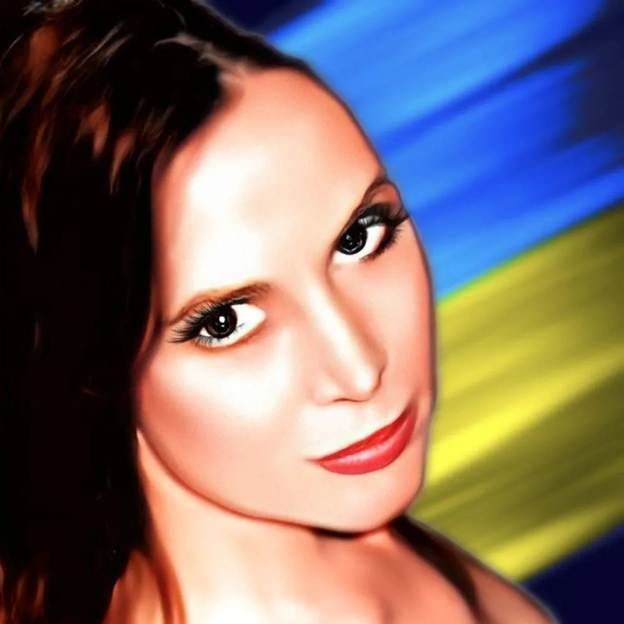
Trueman and Triola note: A lot of the time I just wanna blow everything up, lean fully into my Antifa energy and get to it. I feel frustrated and angry to the point of no return. But then I come across Khashoggi’s Ghost and I find solace in a kindred spirit who keeps fighting the good fight in the only ways we can and will, in the end, win it.
There are Bluesky accounts that shout, some that curate, some that soothe, and some that simply drift by like weather. And then there are the ones that feel like a civic pulse—steady, insistent, morally awake. Khashoggi’s Ghost (@urocklive1) belongs to that last category: a feed that blends political urgency, philosophical clarity, and the connective tissue of social media into something like a public square in miniature.
I. A Voice Shaped by History, Speaking in the Present Tense
The name alone carries a moral charge. To invoke Jamal Khashoggi is to invoke the unfinished business of truth, accountability, and the cost of dissent. But the account doesn’t trade in martyrdom or nostalgia. Instead, it uses the name as a moral orientation—a reminder that politics is not a spectator sport, and that the stakes are always human.
The bio reads like a credo:
“Democracy is the way. Truth and justice matter.”
bsky.app
This is philosophy in the civic sense—not abstract metaphysics, but the lived ethics of a citizen refusing to look away.
II. A Curatorial Politics: Reposts as Argument
Scrolling the feed, you see immediately that Khashoggi’s Ghost is less a diarist and more a curator of the world’s pressure points. The reposts form a kind of mosaic:
The war in Ukraine, from frontline updates to geopolitical analysis
The rise of authoritarianism and the language that enables it
Climate data, economic inequities, and the machinery of disinformation
The hypocrisies of power, especially in the U.S. political sphere
Each repost is a gesture: pay attention to this; this matters; this is part of the story of our time.
bsky.app
This is political philosophy by accumulation. Instead of a single thesis, the feed builds a worldview through patterns, echoes, and recurrence. It’s the digital equivalent of a commonplace book—except the commonplaces are global crises, democratic fragilities, and the moral failures of institutions.
III. The Philosophy of Connection: A Feed as a Civic Network
What’s striking is how Khashoggi’s Ghost uses the architecture of Bluesky itself. The account doesn’t posture as a lone prophet. It’s a node—a connector of journalists, analysts, activists, and everyday observers who refuse to normalize cruelty or corruption.
The feed becomes a kind of distributed conscience, where:
Expertise is borrowed and amplified
Outrage is contextualized rather than inflamed
Humor appears as a pressure valve, not a distraction
Global events are woven into a shared moral fabric
This is social media at its best: not a performance, but a relay system for civic attention.
IV. The Emotional Register: Weariness Without Surrender
One line from the bio stands out:
“Less proud to be an American than I used to be. I really thought we were better than this.”
bsky.app
It’s not despair; it’s disappointment sharpened into vigilance. That tone—clear‑eyed, wounded, but still committed—is the emotional through-line of the account. It’s the voice of someone who refuses to disengage, even when the news cycle makes disengagement tempting.
This is where the philosophy deepens:
To stay attentive in a time of democratic erosion is itself a moral act.
V. Why This Matters in the Bluesky Ecosystem
In a platform full of art, jokes, micro‑communities, and ephemeral delights, Khashoggi’s Ghost performs a different civic function. It reminds the network that:
Politics is not separate from daily life
Global suffering is not abstract
Democracy is fragile and requires witnesses
Social media can be a tool for solidarity rather than spectacle
The account becomes a kind of ethical metronome, keeping time against the accelerating chaos of the world.
VI. Closing Reflection: A Ghost That Refuses to Haunt
Despite the name, there is nothing ghostly about the presence. It is vivid, insistent, and alive to the world’s contradictions. If anything, the “ghost” is a reminder of the cost of silence—and the necessity of speaking, reposting, connecting, insisting.
In the end, Khashoggi’s Ghost models a form of digital citizenship that feels increasingly rare:
attentive, morally grounded, globally literate, and unafraid to name what is broken.
It is not just a feed.
It is a practice.